
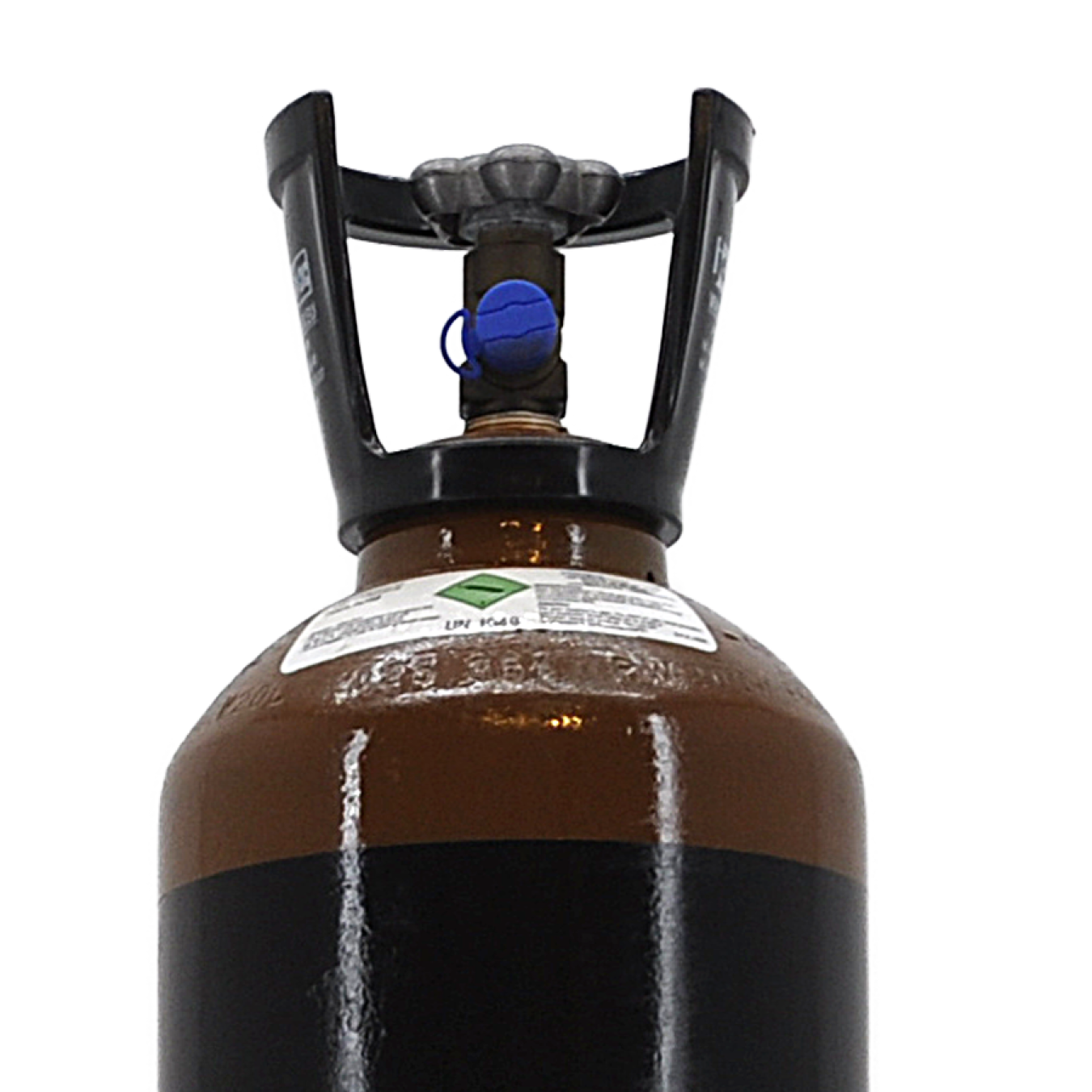
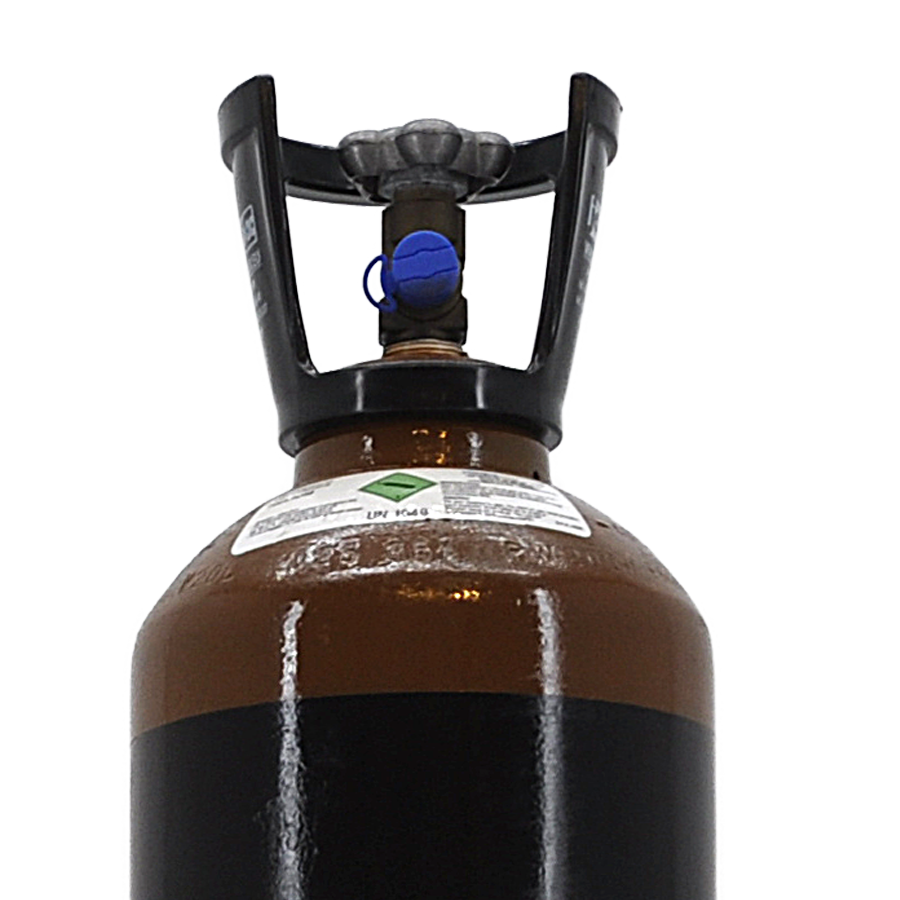
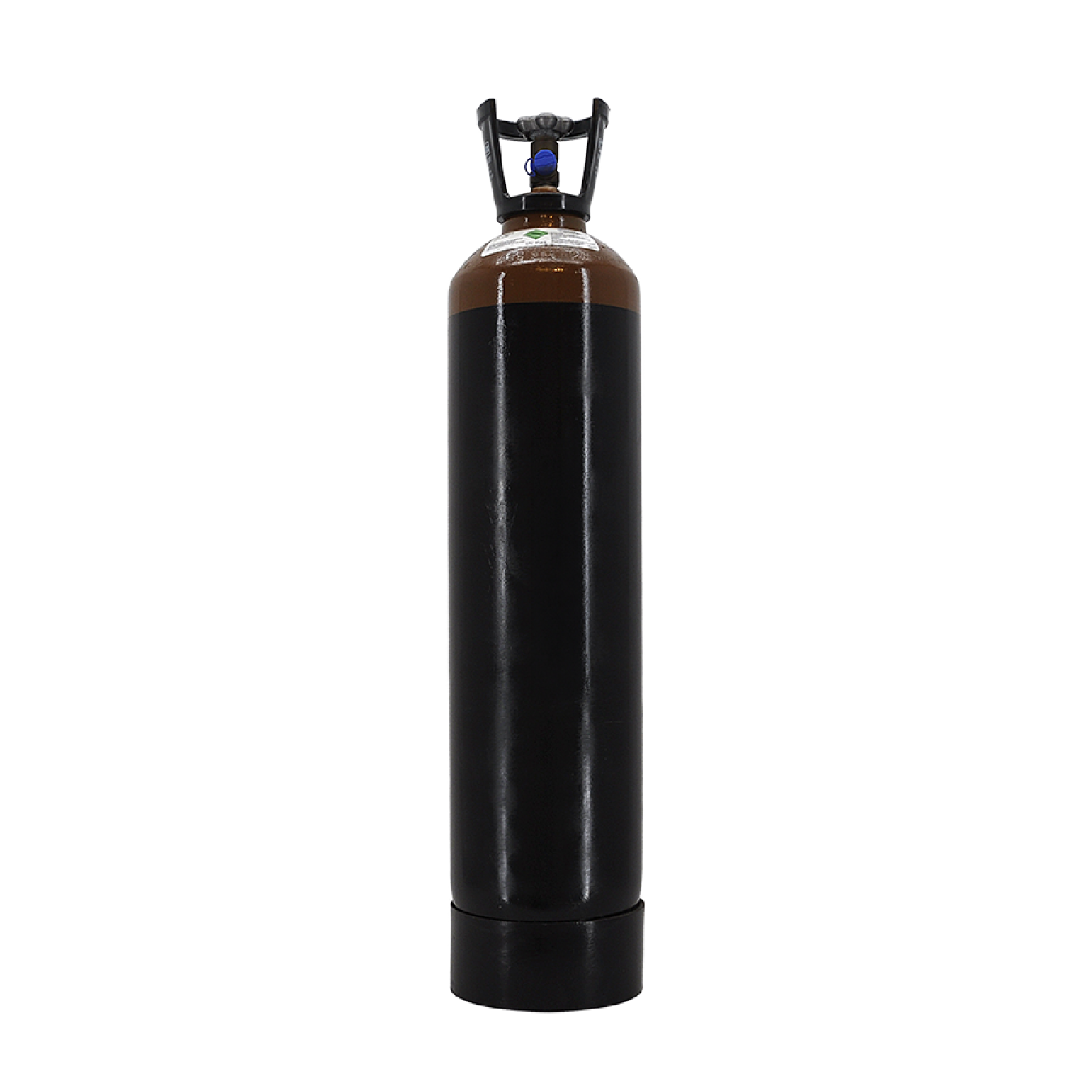
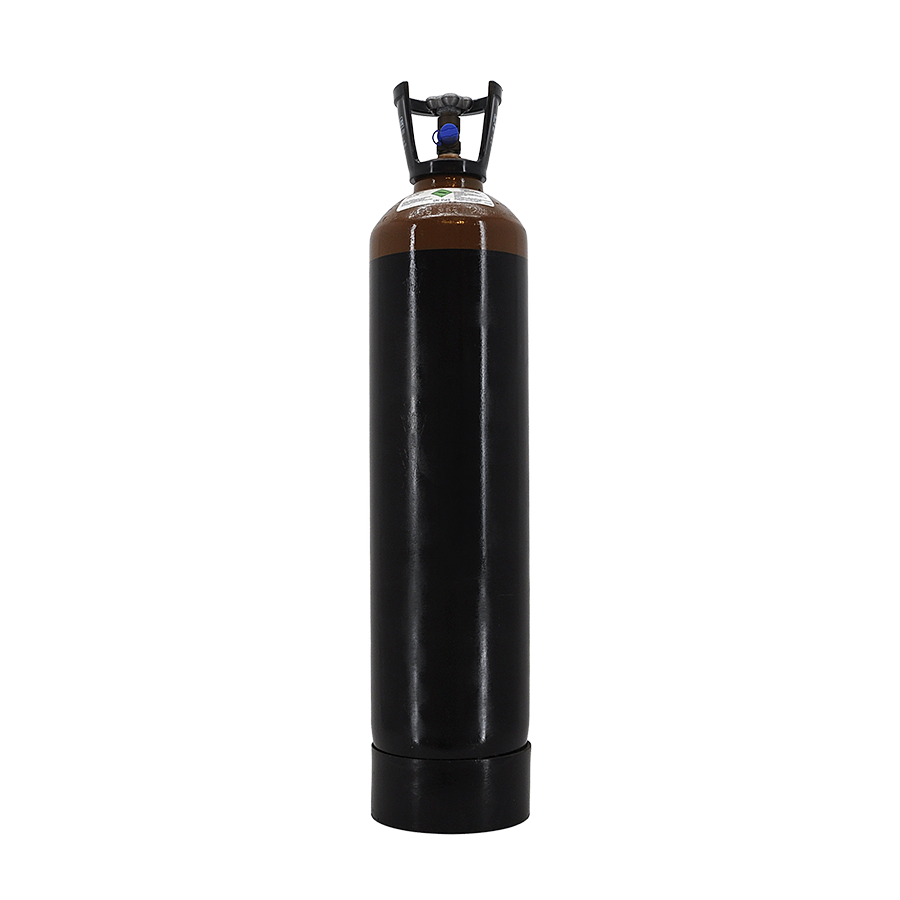
Helium He - Food Grade B20
A Helium B20 cylinder in food grade (E939) is a specific 20-liter (water capacity) gas cylinder filled with compressed, ultra-pure helium gas under high pressure, specially developed for the strict standards of the food and packaging industry. Helium is an inert noble gas, meaning it is chemically stable, does not react with foodstuffs, and is completely odorless and tasteless. Because helium is inherently safe and stable, this cylinder does not require a porous mass or solvent. The gas is simply stored directly in the cylinder under high pressure (usually 200 bar).
Main applications (Food grade):
- Leak detection in packaging lines: Due to helium's small atomic size, it is extremely suitable for quickly and accurately detecting microscopic leaks in sealed food packaging and vacuum systems to guarantee shelf life.
- Modified Atmosphere Packaging (MAP) / Shielding gas: In specific processes within the food industry, helium is used as part of gas mixtures or as an inert gas to displace oxygen, preventing spoilage and preserving product quality.
- Pressurization and transfer: Pressurizing or pumping liquid foods and beverages where an inert, non-reactive gas is required that does not affect taste or composition.
- Laboratory use & quality control: Application in analytical techniques (such as gas chromatography) in quality control labs within the food industry for testing and analyzing raw materials and finished products.
Product details
Gas cylinder Helium (He), containing 20 liters of food-grade helium, specially designed for applications in the food industry (manufactured for professional and long-term use).
Transport
Key guidelines for safe transport
1. Preparation: The "Three Golden Rules"
- Valve closed and regulator off: Close the main valve completely, bleed the hose, and remove the pressure regulator entirely for transport.
- Protective cap: Always screw the protective cap (valve cover) firmly onto the cylinder. This protects the valve in the event of a fall.
- Inspection: Check that the valve is leak-free and that there is no grease or oil on the connection (critical for safety).
2. Loading and Securing
- Always upright: Ideally, transport the cylinder in a vertical position. Use a special cylinder rack or a sturdy hand truck secured in the vehicle.
- Fixation is crucial: A filled B20 cylinder is heavy. During an emergency stop or a turn, it can fly through the cargo area with enormous force. Secure the cylinder with certified tension straps to lashing points in the cargo area.
- Not on the passenger seat: Never transport gas cylinders on a seat in the cabin. In a collision, the cylinder becomes a dangerous projectile.
3. Vehicle Ventilation
- Fresh air: The greatest danger when transporting helium is asphyxiation from a leak in an enclosed space. Ensure continuous ventilation in the cargo area (e.g., ventilation grilles or a slightly open window in a small van).
- Do not leave unattended: Never leave the cylinder in a sealed vehicle, especially in the sun. Heating increases the pressure in the cylinder, unnecessarily stressing safety features.
4. Legal framework (ADR)
- Private: If you are transporting one or two cylinders for private use, you are usually exempt from heavy ADR obligations for dangerous goods (the 'private transport exemption').
- Commercial: If you use the cylinder for work (e.g., as a decorator or technician), ADR legislation applies. This means your vehicle must meet specific safety requirements, such as carrying a fire extinguisher (min. 2kg) and the driver must know basic hazardous materials instructions.
Information
Safety
Here are the crucial safety rules for working with a B20 cylinder:
1. Risk of Asphyxiation
- Oxygen displacement: Helium is not toxic, but it is an asphyxiant gas. If a B20 cylinder leaks in a small, enclosed space (such as a basement, a small van, or a closed storage room), it displaces the available oxygen.
- Consequence: You will not notice this (it has no odor or color), but it can lead to unconsciousness or worse. Therefore, ventilation is always required.
2. Risk from High Pressure (200 bar)
- Projectile hazard: A B20 cylinder is under enormous pressure. If the valve breaks off due to a fall or impact, the force of the escaping gas can propel the cylinder like a projectile through a wall or vehicle.
- Rule: Always wear the protective cap when the cylinder is not in use.
- Maintenance: Use only pressure regulators suitable for the pressure and connection of a 200 bar Helium cylinder.
3. Safe Handling (Operation)
- Cold hazard: When opening the valve quickly, the pressure regulator or coupling can cool down extremely rapidly due to the Joule-Thomson effect (rapid gas expansion). Do not touch metal parts with bare hands during or immediately after use to prevent frostbite.
- No grease or oil: Never use oil, grease, or lubricants on the connections. Although Helium is inert, this is the standard safety procedure for all gas cylinders to prevent valve contamination.
- Slow opening: Always open the main valve very carefully and slowly to avoid "pressure shocks" in the regulator.
4. Storage and Stability
- Vertical storage: Always store cylinders upright. A B20 cylinder is relatively narrow and can easily tip over.
- Securing: Always secure the cylinder to a wall, in a cylinder rack, or with a chain. For mobile use, always use a hand truck equipped with a chain or safety strap.
- Temperature: Avoid storage in direct sunlight or near heat sources. The pressure in the cylinder increases as the temperature rises.
5. Transport (Checklist for vehicles)
- Ventilation: Ensure that the area where the cylinder is located is always connected to the outside air (e.g., via ventilation grilles).
- Fixation: The cylinder must be immovable. An unsecured B20 cylinder flying through the cargo area during an emergency stop is life-threatening.
- No pressure regulator: Never transport the cylinder with the pressure regulator still attached. The regulator protrudes and is the weakest point; this is the most common cause of leaks during transport.