
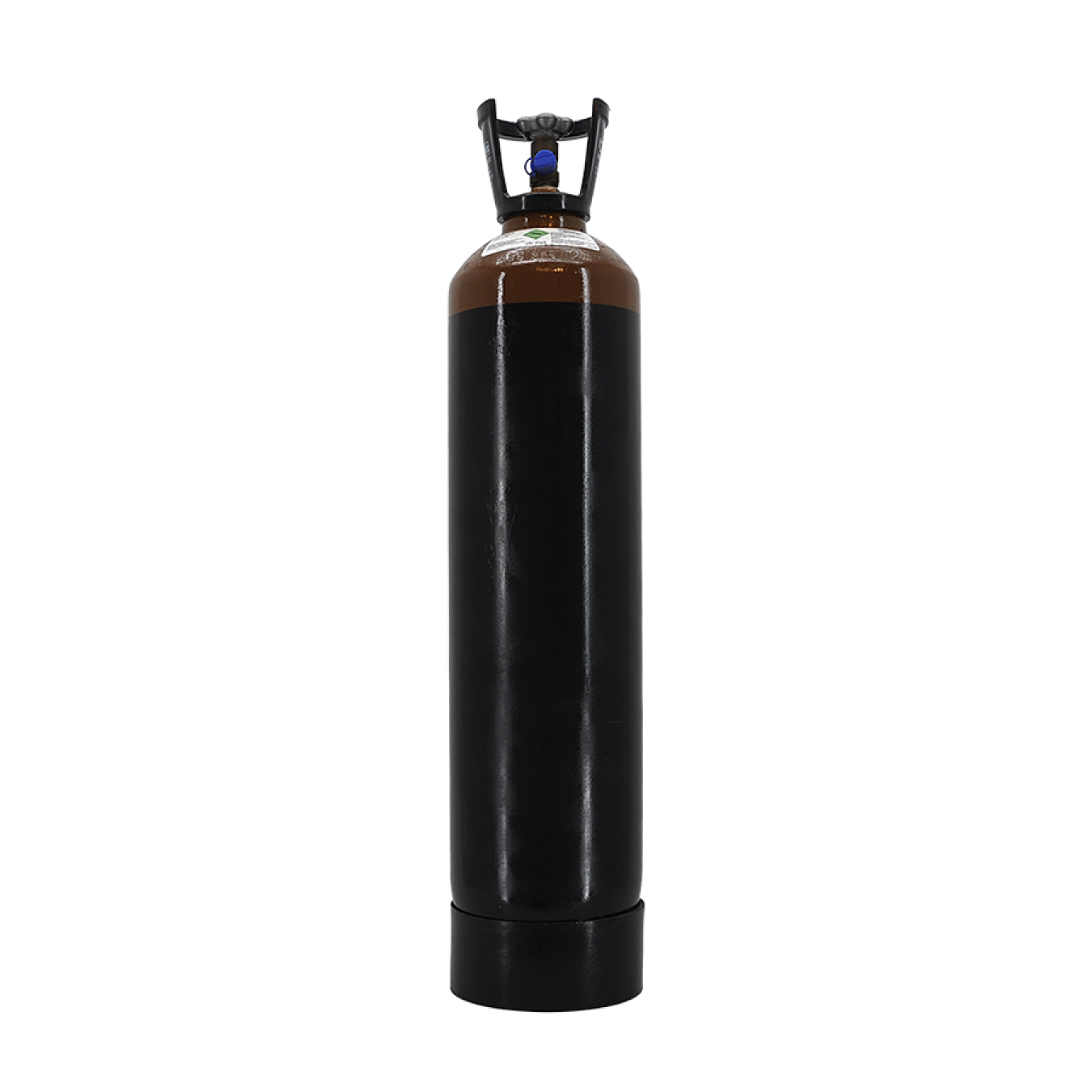
Refill Helium He Bundle - Food grade B50
- You can only order a bundle refill if you already have an empty JANOX bundle.
Product details
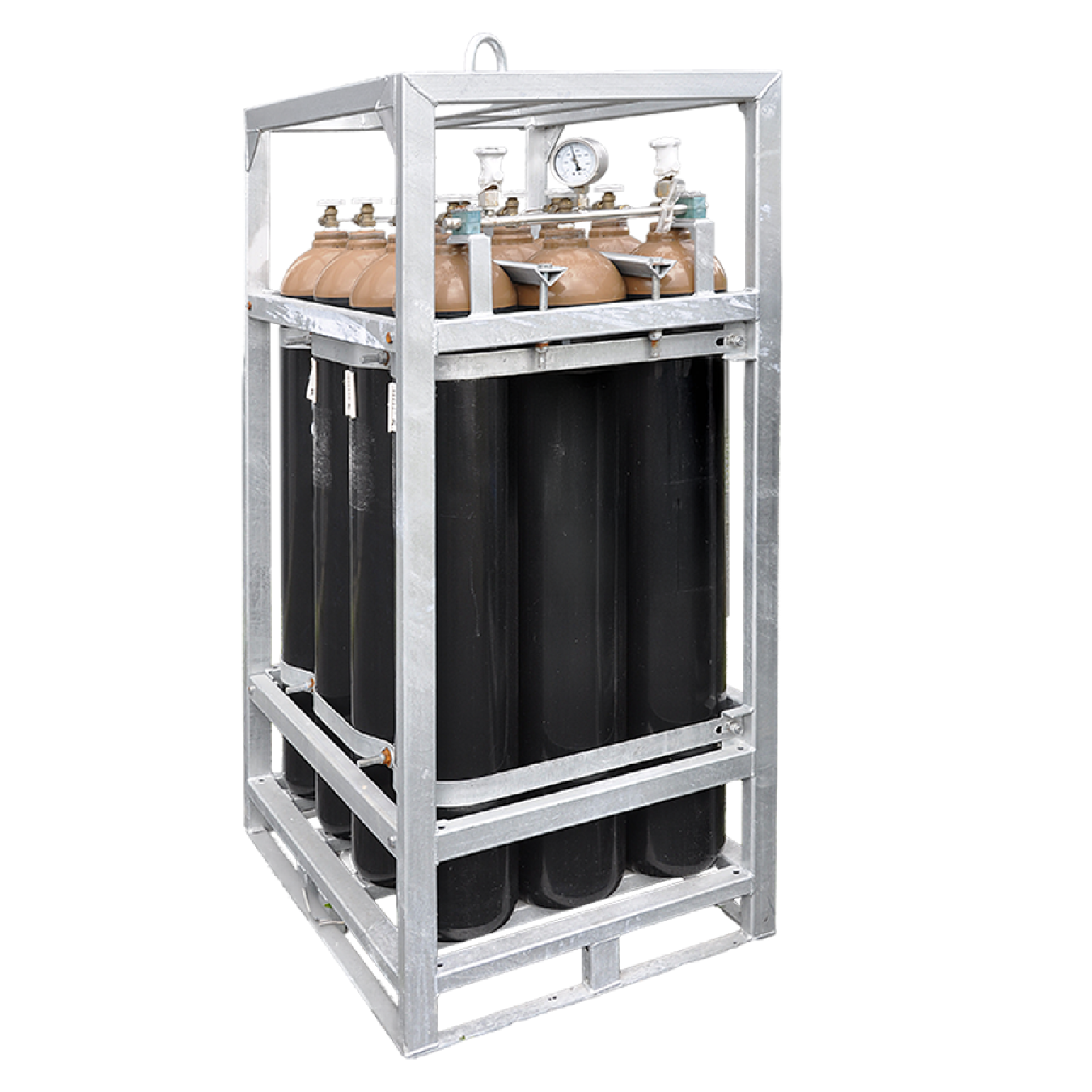
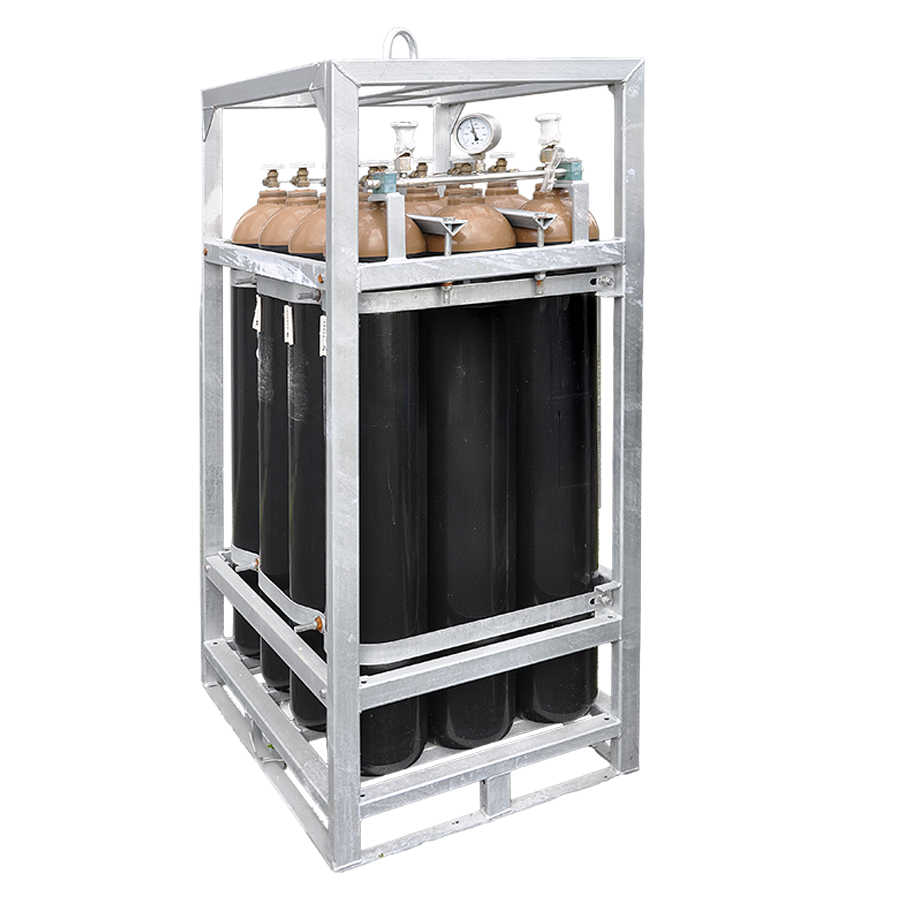
Gas bundle (12 cylinders) Helium (He), consisting of a bundle of 12 gas cylinders with food-grade helium 50L total 600L, specially designed for industrial applications in the food industry (manufactured for professional and intensive long-term use).
Transport
Guidelines for Safe Transport (Business/ADR)
1. Preparation (All sizes)
- Valve closed: Ensure the main valve is always completely closed.
- Regulator off: Always remove the pressure regulator and hoses. This is the most vulnerable part of the cylinder.
- Protective cap: Place the metal valve cover (protective cap) firmly on the cylinder.
- No leakage: Before departure, check that no hissing sound is audible.
2. Loading and Securing
- Position: Always transport cylinders (B10, B20, B50) upright. Lying cylinders can roll during emergency stops and are harder to secure.
- Fixation:
- B10/B20: Use a hand truck or cylinder holder and secure with tension straps.
- B50: Use a cylinder holder and heavy-duty ratchet straps (fix at two heights).
- Bundles: These must be transported with a vehicle equipped for heavy loads (forklift loading capability) and equipped with certified lashing points in the frame.
- Separation: Ensure proper separation between the cargo area and the driver's cabin (in vans).
3. Ventilation & Safety in the vehicle
- Ensure a constant airflow in the cargo area to the outside. If helium leaks in a sealed car, it displaces oxygen, posing an asphyxiation risk to occupants.
- Do not leave unattended: Do not leave cylinders in the car, especially in the sun. Pressure in the cylinder increases with heat.
4. Business Transport (ADR) As soon as you transport gas cylinders for work (even as a freelancer), you fall under ADR legislation (Transport of Dangerous Goods by Road):
- Documentation: You are required to carry a transport document (with the UN code for helium: UN 1046, Helium, compressed, 2.2).
- Equipment: Your vehicle must be equipped with at least one fire extinguisher (min. 2 kg).
- Safety instructions: The driver must be familiar with the risks and emergency procedures.
Information
Safety
Concise summary of safety aspects for working with Helium (B10, B20, B50, and Bundles)
1. The greatest invisible danger: Asphyxiation
Helium is not toxic, but it is an asphyxiant gas. In the event of a leak, it displaces oxygen in the room. Because helium is odorless, colorless, and tasteless, you will not notice that oxygen levels are dropping.
- Measure: Always ensure excellent ventilation. In enclosed spaces, oxygen monitoring equipment (with alarm) is strongly recommended.
2. Risk of High Pressure
All cylinders are under a pressure of 200 bar. A break in the valve can lead to an uncontrolled escape of gas, where the cylinder can act as a projectile.
- Measure: Always leave the protective cap (valve cover) on the cylinder when it is not directly in use.
- Measure: Always remove the pressure regulator and hoses during transport.
3. Mechanical hazards
- Fall hazard: Gas cylinders can easily tip over due to their shape and weight, which can cause serious injury. Always secure them vertically with chains, brackets, or in a special rack.
- Frostbite: In the event of rapid gas escape (e.g., due to a defective coupling), valves and hoses can become extremely cold. Never touch them with bare hands.
4. Transport Safety
- Transport upright: Cylinders must always stand upright in a vehicle and be secured with tension straps.
- Ventilation: Ensure that the cargo area is ventilated to the outside.
- No passenger cabin: Never transport gas cylinders loose in a passenger car; use a well-ventilated (and separated) cargo area.
5. Operation
- No oil or grease: Never use grease or oil on the valve or connections.
- Open slowly: Always open the main valve very slowly to prevent pressure spikes that could damage the regulator.
- Knowledge: Operation of large units (B50 and Bundles) is only permitted for instructed personnel.