
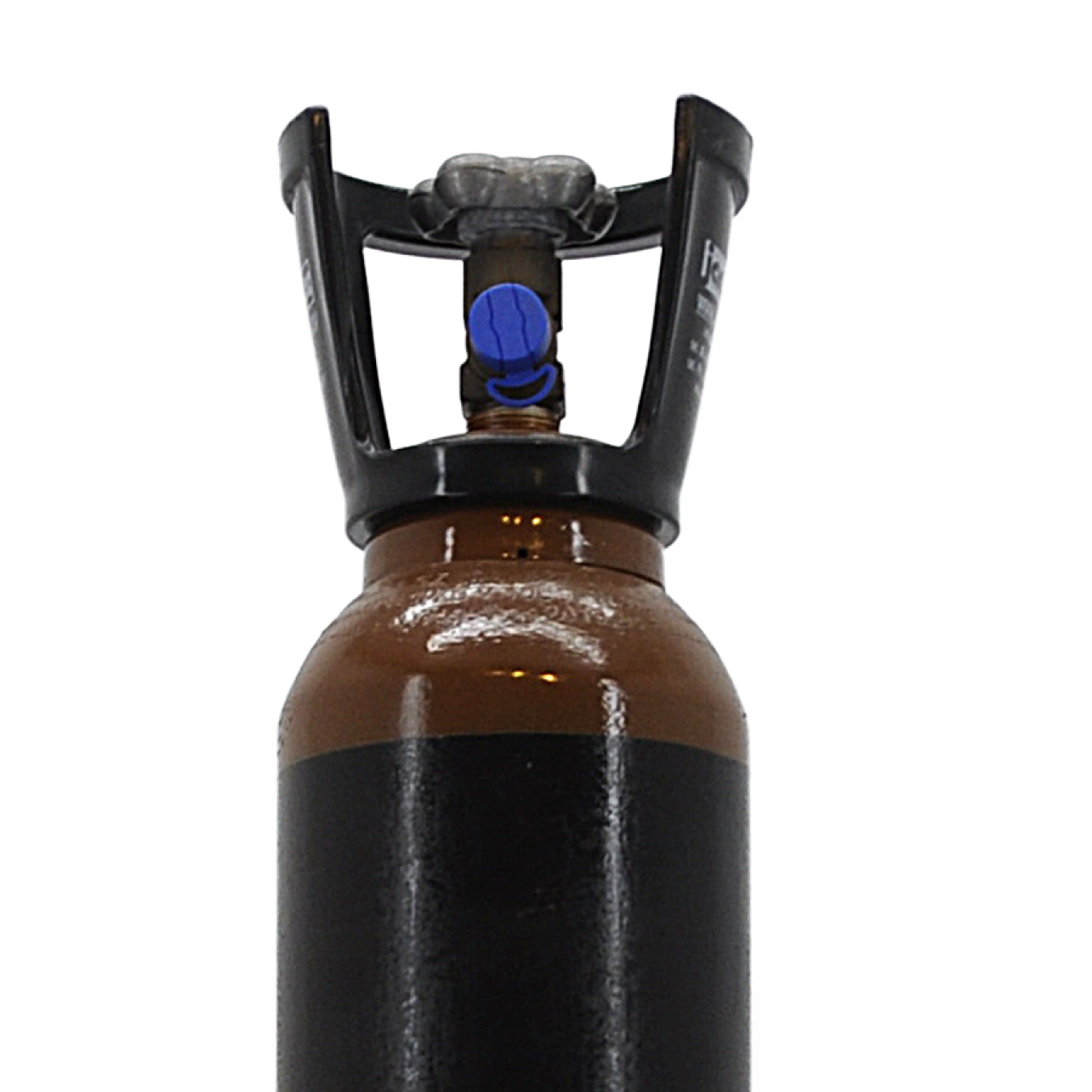
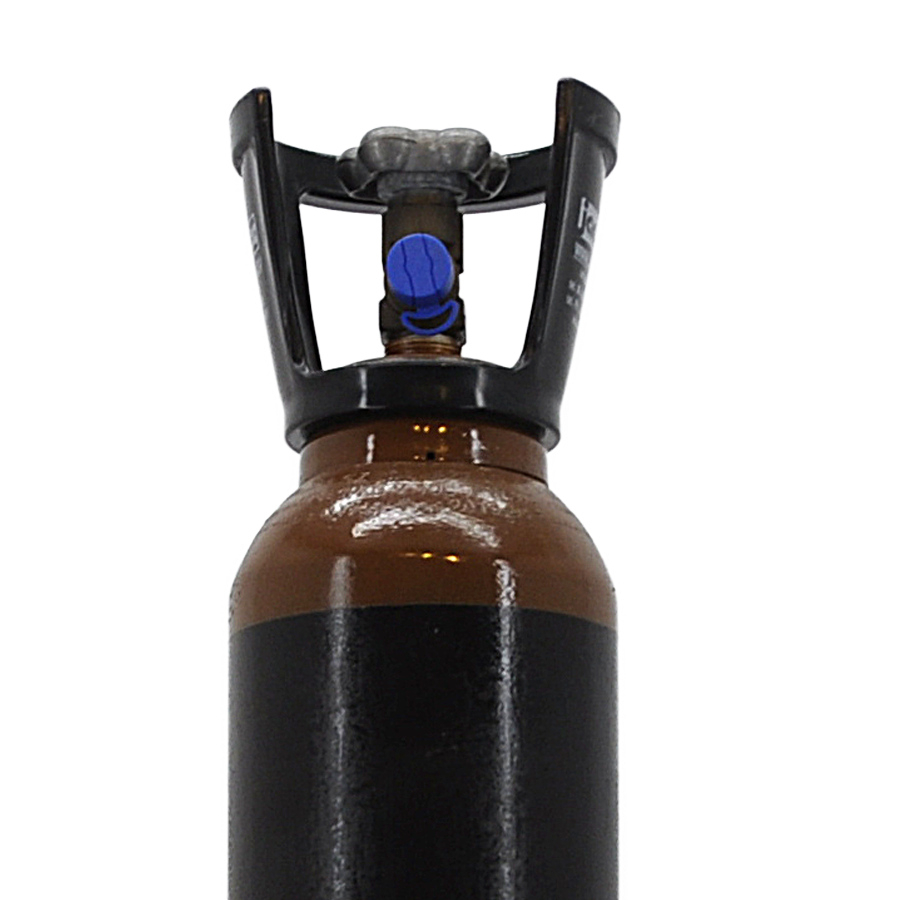
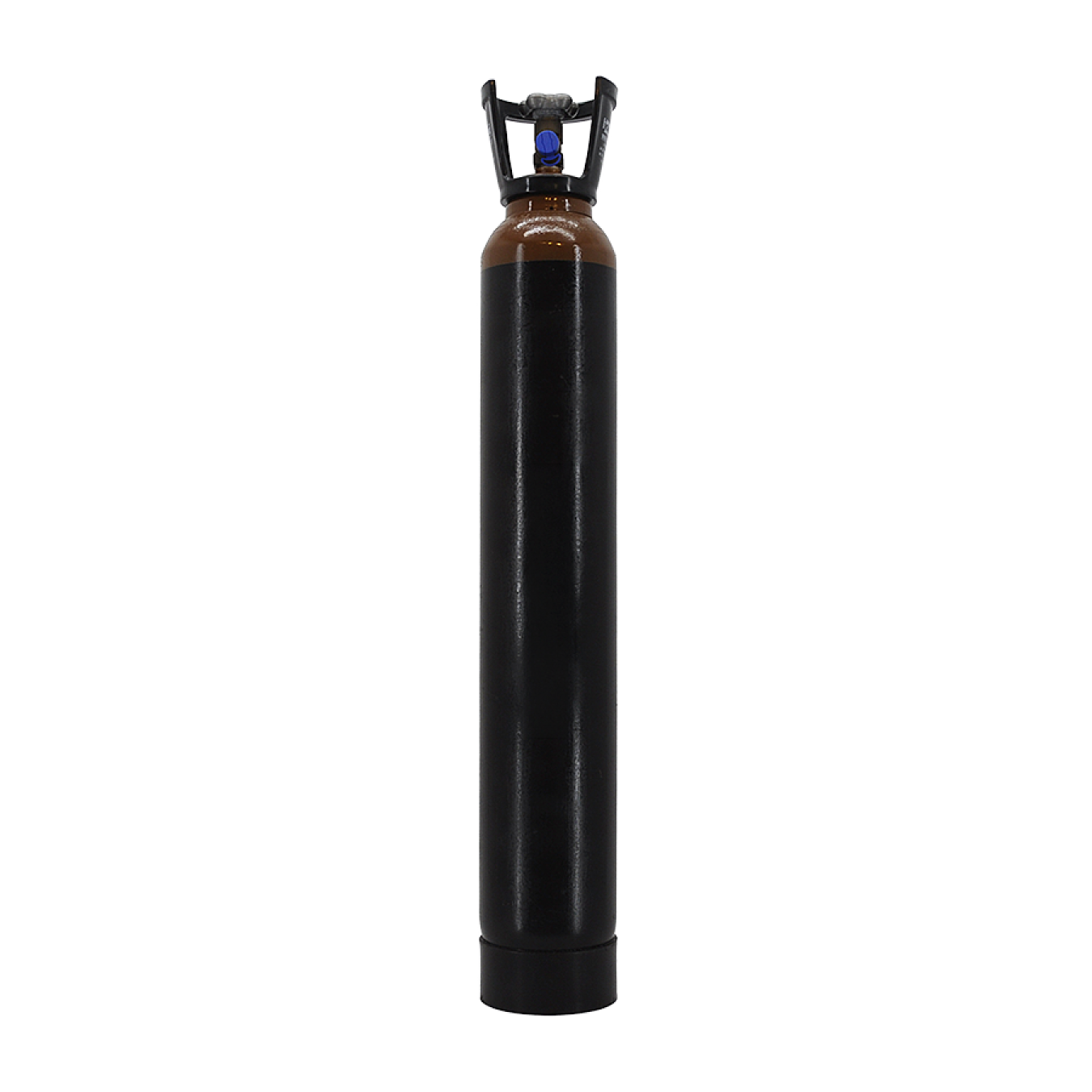
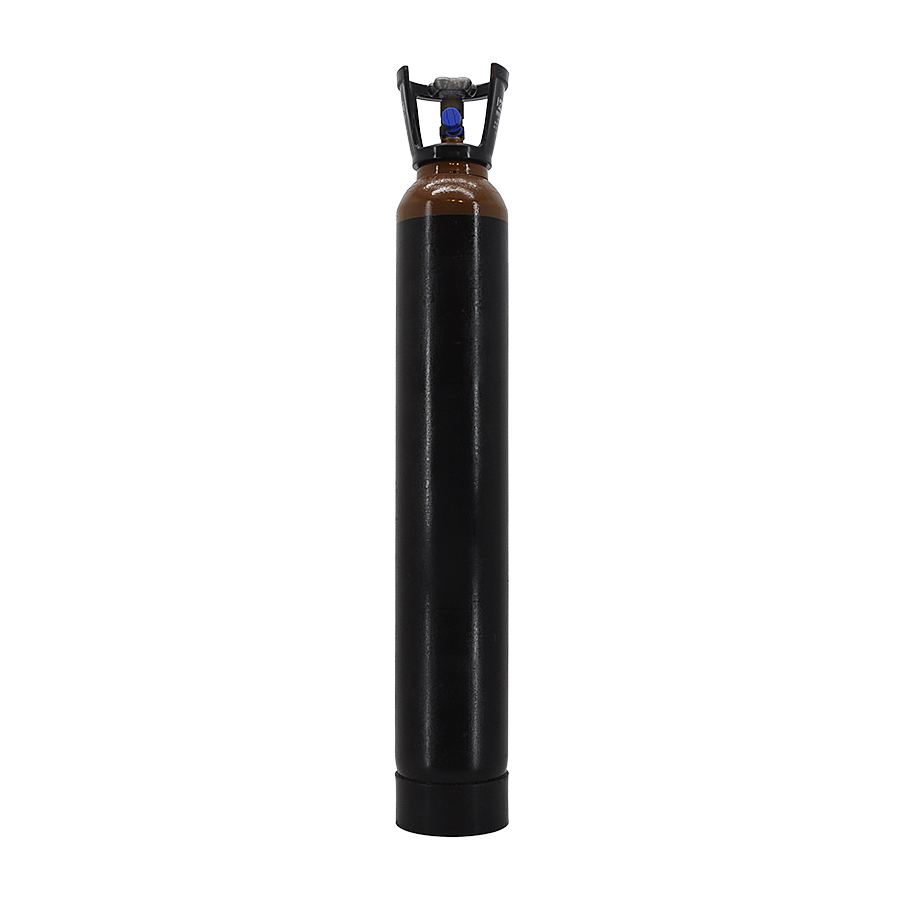


Helium He - B10
A Helium B10 cylinder is a specific 10-liter (water capacity) industrial gas cylinder filled with compressed helium gas under high pressure. Unlike acetylene, helium is an inert noble gas, meaning it is chemically stable and does not react with other materials.
Because helium is inherently safe and stable, no porous mass or solvent is required for this cylinder. The gas is simply stored directly in the cylinder under high pressure (usually 200 bar).
Key Applications
- Leak Detection: Due to the small atomic size of Helium, it is extremely well-suited for detecting microscopically small leaks in pipes and vacuum systems.
- Ballooning and Decoration: Widely used for filling balloons due to its low specific gravity (lifting capacity).
- Shielding Gas: In specific welding processes (such as TIG welding), Helium is used as a shielding gas to create a more stable arc and higher heat transfer, resulting in deeper penetration.
- Laboratory Use: Used in analytical techniques such as gas chromatography.
1. Events and Recreation
Balloons: This is the most well-known application. Helium is much lighter than air, causing balloons to rise on their own. A B10 cylinder (10-liter water capacity) is a convenient size for filling a significant number of balloons for parties or events.
2. Industry and Technology
- Leak Detection: Due to the extremely small atomic size of Helium, it is ideally suited for locating microscopic leaks in pipes, tanks, or vacuum systems.
- Shielding Gas (Welding): In specific welding processes, such as TIG welding, Helium is used as a shielding gas (sometimes mixed with Argon). Helium creates a hotter welding arc, which provides deeper penetration and can increase welding speed.
- Cooling: Helium has the lowest boiling point of all elements. In industry and science, it is used for cryogenic applications (extremely low temperatures), such as cooling superconducting magnets in medical MRI scanners.
3. Laboratory and Science
- Carrier Gas: In gas chromatography (a technique to separate and analyze mixtures of substances), Helium is often used as a carrier gas because it is chemically inert and therefore does not interfere with the analysis.
4. Special Applications
- Deep-Sea Diving: For professional divers, Helium is sometimes mixed with Oxygen and Nitrogen (Trimix) to prevent nitrogen narcosis and to reduce breathing resistance at great depths.
Product details
Helium (He) gas cylinder, filled with 10L of He, specially developed for diving tanks and as balloon gas (made for long-term and professional use).
Transport
Guidelines for Safe Transport
1. Preparation of the cylinder
- Shut off: Always close the cylinder valve completely.
- Disconnect: Always remove the pressure regulator (reducer), gas hoses, and other accessories.
- Protective cap: Always place the protective cap (valve cover) over the valve. This is the most vulnerable part of the cylinder; if it breaks off, the cylinder could shoot through the room like a projectile in an accident.
2. During transport
- Transport upright: Transport cylinders upright whenever possible.
- Securing: Ensure that the cylinders absolutely cannot slide, roll, or fall over. Use tension straps or special holders.
- Ventilation: Ensure permanent, good ventilation in the vehicle. In the unlikely event that gas escapes, it must be discharged directly to the outside to prevent asphyxiation (with helium) or explosion hazards (with other gases). Avoid transport in a completely sealed trunk.
- Do not leave unattended: Never leave gas cylinders unattended in a vehicle, especially in the sun or near heat sources. Pressure in the cylinder can rise dangerously high due to heat.
3. Important safety points
- Combination of gases: Preferably do not transport flammable gases (like acetylene) together with other gases, and certainly not with flammable materials (fuel, paint, oil).
- Smoking: Smoking in the vicinity of gas cylinders (during loading/unloading or in the vehicle) is strictly prohibited.
- Leak check: Always check before departure whether the valve is tightly closed and that there are no audible leaks.
- Placement in the car: Preferably transport in an open trailer or a well-ventilated van. If it must be in a passenger car, secure the cylinders on the floor (not on the seats) and ensure maximum ventilation via open windows or ventilation systems.
Information
Safety
Although Helium itself is neither toxic nor flammable, it is an asphyxiant gas that remains a gas under high pressure. It is colorless, odorless, and tasteless, meaning it goes unnoticed if it displaces oxygen in an enclosed space, which poses a risk of suffocation.
Always ensure good ventilation when using it in indoor areas.